In 2004 Amy Wallace and Larisa Mishina presented their thesis, “Relations between the Use of Puppetry in the Classroom, Student Attention and Student Involvement.” The thesis highlighted the benefits of puppetry in the classroom, including such benefits as increased attention span and higher retention of information. Since then, very little has been researched on puppetry in terms of educational implementation, best practices and overall effectiveness. Very little, that is, until now.
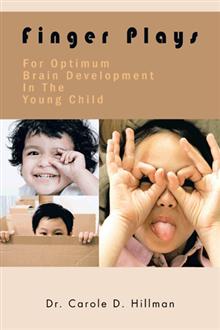
In her pioneering new book Finger Plays For Optimum Brain Development In The Young Child (published by AuthorHouse), Dr. Carole D. Hillman distills her 30+ years as an educator into a resource guide chock-full of practical, well-researched activities and practices for the at-home or at-school teacher.
Encouraged by David Sousa’s How the Brain Learns, Hillman researched the age-old arts of storytelling and puppetry and their effect on learners when implemented into early childhood education.
In Finger Plays For Optimum Brain Development In The Young Child, Hillman shows how by using finger plays teachers can provide young learners with opportunities to strengthen their motor and language development, as well as positive self-esteem and memory development.
“In addition to providing assistance for learners in areas of perceptual motor development, finger plays may also be used as a direct teaching tool involving behavioral as well as academic development,” says Hillman. “Instead of asking learners to be quiet when getting ready for an activity the teacher or parent may, instead, utilize a creative finger play to gain attention. These transitions help keep the learners focused upon the expected task and directed away from other extraneous activities.”
From: PRWeb.com