Jennifer Stoessner, Board of Trustees member, shares with us what she has been doing in one of her college classrooms.
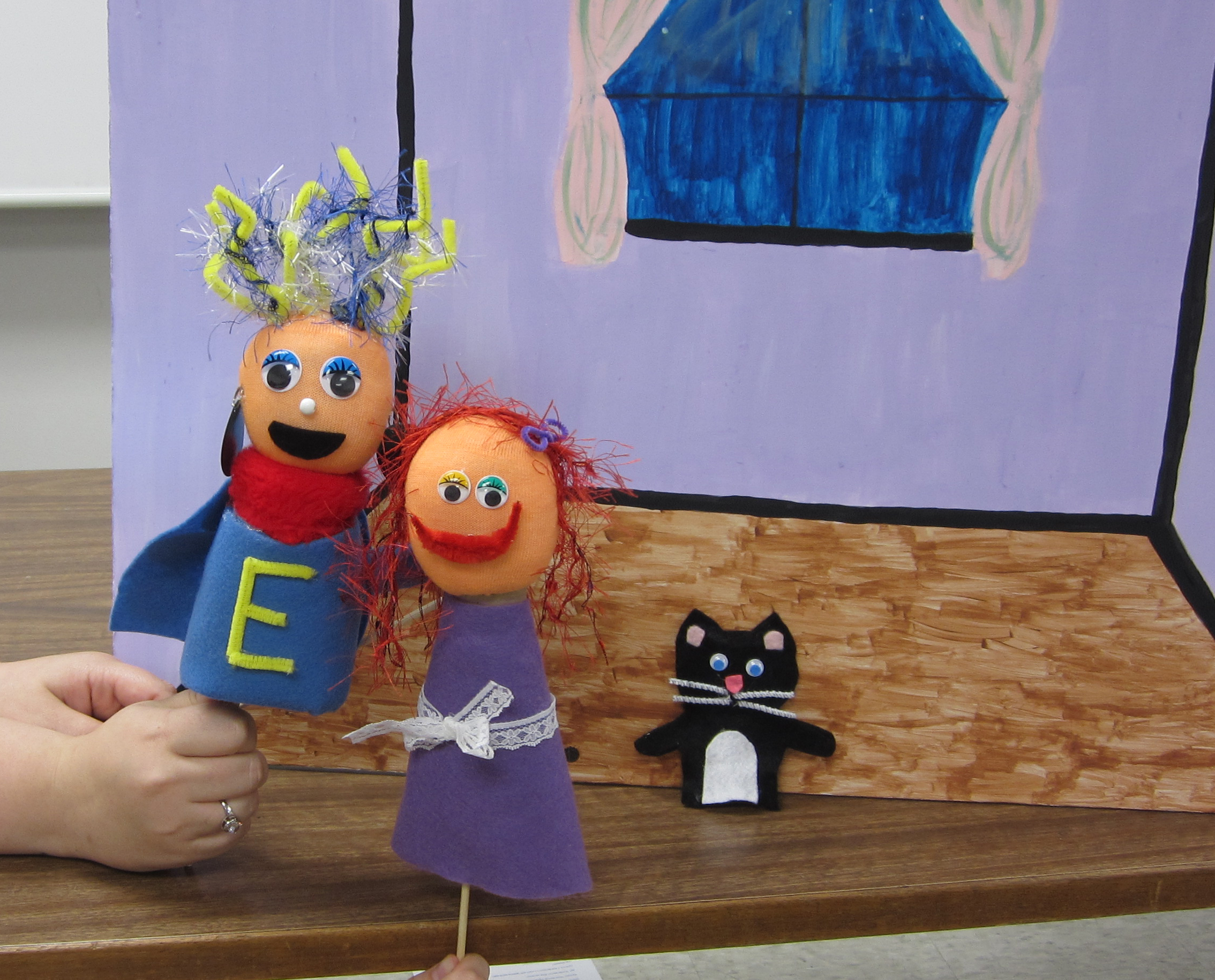
Electricia
As a puppeteer, I love to share my passion for the art form with everyone. As an educator, I work to make meaningful experiences for my students. As luck would have it, I frequently am able to do both. I teach theatre history and literature at the university level and rarely get to focus on puppetry as a topic in itself. However, I am constantly finding ways to sneak puppets into my classes. In the spring semester, I teach a creative dramatics course emphasizing ways in which the tools of theatre and drama can be used by educators. We spend a lot of time talking about the value interactivity and performance adds to a student’s education.
My students’ most recent puppetry assignment was to create a solo puppet show, two to three minutes in length. These shows had to have either an environmental theme or a health-centered message. They had two weeks of class—three 50 minute meetings per week—to devise, design, and build their puppets. I led them through lessons on storyboarding and scripting (we read George Latshaw’s chapter on playwriting for puppets), practice in creating character based on movement, and puppet construction from recycled materials.
I think that it is always important that my students have a sense of how to succeed at an assignment and I provide a rubric to guide them. A rubric is a useful tool for any teacher—I heartily recommend them to you all—and mine includes categories that deal with the puppets themselves—completeness, function, and design—as well as the show’s content and performance. I realize that the students may have no prior experience with puppetry—one even informed me that she hates puppets (a subject for a different blog on a different day)—and many of them lack confidence as performers. The rubric allows them all to succeed at whatever skill level they begin and gives me a set of standards for grading their work.
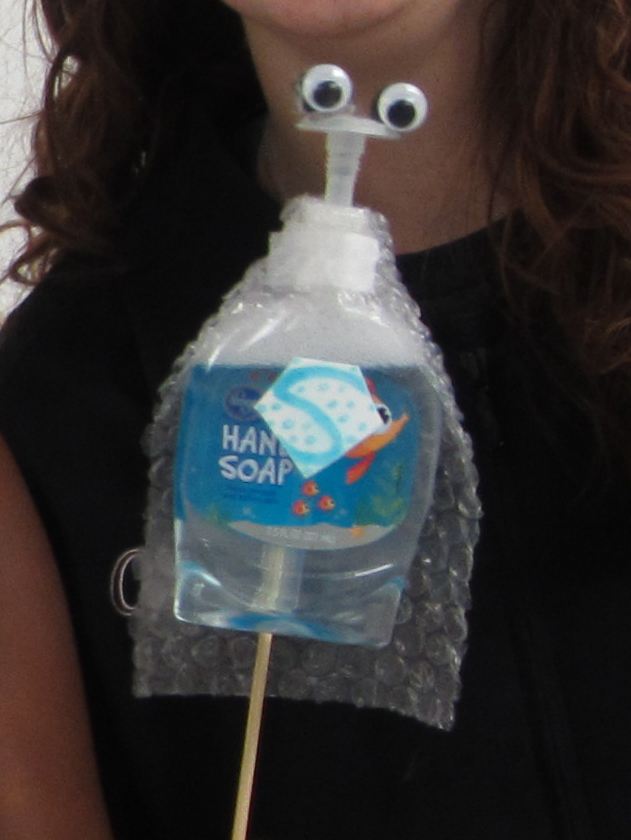
Soap Boy
The students rose to the challenges of the assignment and on the day of the performances, there were six plays that dealt with the environment. Topics included conservation, littering, and bee colony collapse with animal characters, plant characters, and humanoids, all struggling with trying to make the earth a livable and breathable place. There were also six plays dealing with health issues as varied as smoking cessation, self-esteem and mental health, and the importance of vitamins. The puppets were well made, and in some cases beautiful, but they all served the message and scheme of their play, one of the items on the rubric.
Once my students finish presenting work, I take about a week to complete grading. However, I know that the students are eager for immediate feedback and this is where I engage the rest of the class. Each student was instructed to write down one thing that was great about everyone else’s performance and then they exchanged them at the conclusion. It was like Valentine’s Day for puppet shows! I think that is another important element of the presentation—the audience. The shows need to meet my guidelines, true, but in the end, how it was received by the spectator is what really matters.